






What to Actually Expect From a European Hotel Room
Planning a trip to Europe for the first time? A few things about your hotel room will likely be different from what you’re used to at home, not because anything is wrong, but because European hotels work with older buildings, different voltage, and different norms than a typical US hotel. Here’s what actually changes, and how to plan around it.
Do European hotels have air conditioning?
Not always, and it depends heavily on the building. Many hotels in historic European city centers, especially in Italy, France, and the UK, are housed in structures that are a hundred, two hundred, or several hundred years old, built long before central air was standard. Some properties run AC seasonally, others use individual room units, and older buildings often lean on high ceilings, thick stone walls, and cross ventilation instead. If a consistently cool room matters to you, ask ahead, your travel advisor can confirm this property by property.
 © Pixabay.com
Will my electronics work with European voltage?
Most of them, yes, but not automatically. Europe runs on 220 to 240 volts, compared to 120 volts in the US and Canada. Most modern electronics, phone chargers, laptops, camera batteries, are dual voltage and only need a plug adapter. But anything with a heating element, like a flat iron or a CPAP machine, needs a real voltage converter, not just an adapter, or it can damage the device. The hair dryer provided in your room works fine because it’s already built for local voltage; that doesn’t mean everything else in your suitcase is ready to go.
Why are European hotel rooms and elevators smaller?
Because the buildings simply weren’t designed for it. Older European buildings weren’t built with modern room sizes in mind, and that holds true even at the luxury level; a five-star hotel in Rome or Paris can still feel more compact than a comparable US property. Elevators follow the same pattern: if a historic building has one at all, it may fit only two people and a couple of bags. This isn’t a reflection of quality, it’s a different relationship between architecture, history, and space, and it often means you’re steps from the very thing you came to see.
What does a “double room” mean in Europe?
It doesn’t mean two US-style double beds. More often, a European double room means one larger bed, but that bed might be built from two twin frames pushed together under one shared duvet, or it might be two separate twin beds with their own linens placed side by side. If a single, true large bed matters to you, ask ahead of time; your travel advisor can confirm the exact bed setup with the property before you arrive.
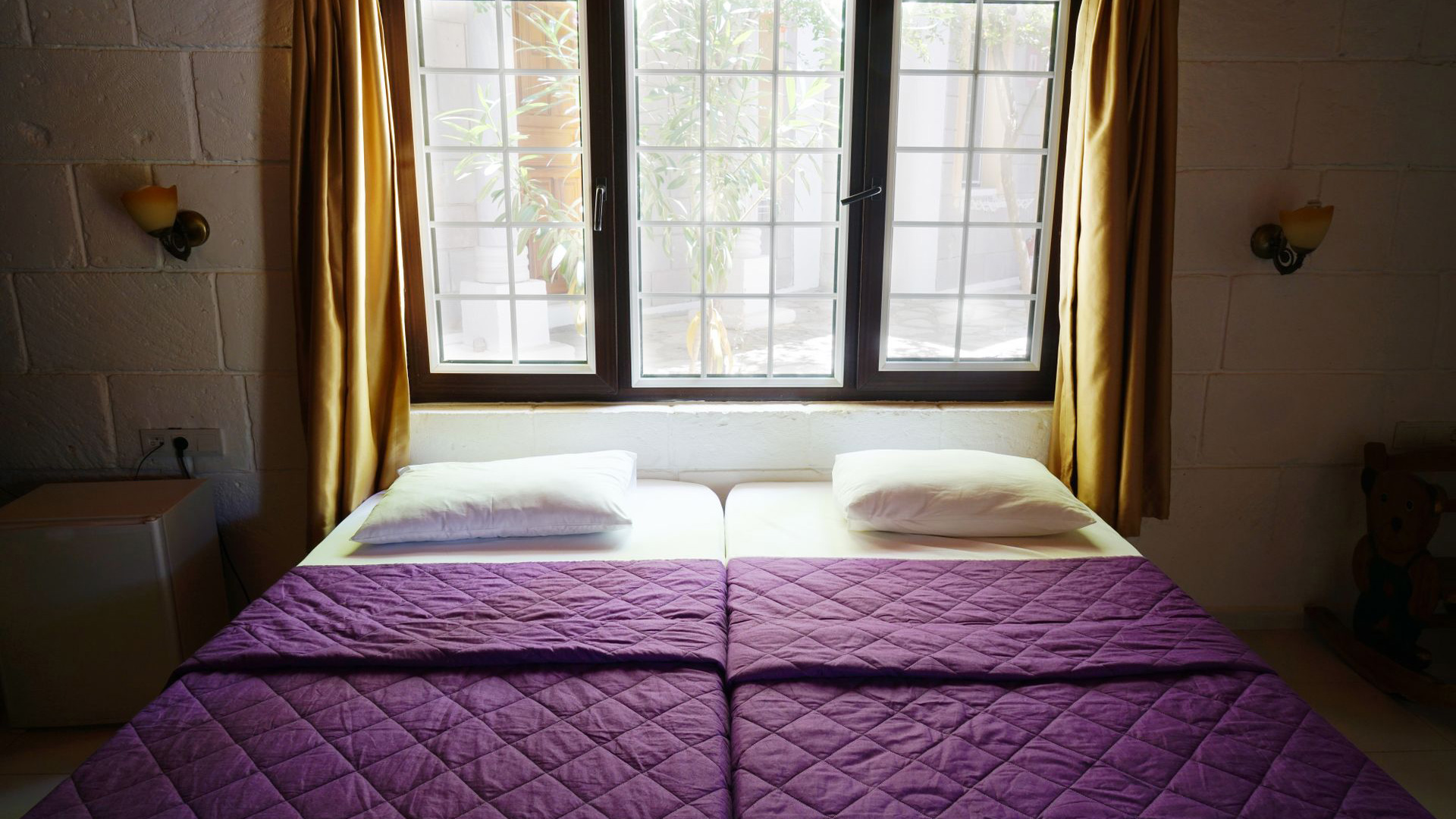 © Engin Akyurt | Pexels.com
Do European hotel rooms have a mini-fridge and microwave?
Usually a fridge, not usually a microwave. A small refrigerator is fairly standard in European hotel rooms, but a microwave typically isn’t. If you’re used to reheating leftovers or warming a bottle for a little one, plan around room service or a nearby cafe instead.
The Takeaway
None of these differences make a European hotel stay any less luxurious, they just make it distinctly European. Knowing them ahead of time means you can pack smart, set the right expectations, and spend your energy enjoying the trip instead of being caught off guard by the room.
 If You Like This, You’ll Like That: A Europe & Africa Travel Matchmaking Guide
Previous
If You Like This, You’ll Like That: A Europe & Africa Travel Matchmaking Guide
Previous
 What Is a Familiarization Trip?
Next
What Is a Familiarization Trip?
Next