

From Blue Doors to Desert Skies: My Journey Through Morocco
Hi there, Sharon here! As Director of Travel Operations at WAC Travel, I lead our booking and operations teams, making sure every trip comes together as planned. Experiencing Morocco firsthand on a familiarization trip, meeting our local partners and touring the properties we recommend, reminded me why I love this work so much.
Over two unforgettable weeks, we traveled from the mountain town of Chefchaouen to the ancient medina of Fes, stopped in Rabat and Casablanca, experienced the energy of Marrakech, and marveled at a night under the stars in the Agafay desert.
Chefchaouen: The Blue City’s Quiet Side
We arrived in Chefchaouen at dusk, the sky turning from gold to blues and deep purples as we climbed into the Rif Mountains, the evening call to prayer, the maghrib, echoing as we pulled into our hotel. It felt like a fitting welcome. Maghrib is also the root of Morocco’s Arabic name, the Maghreb.
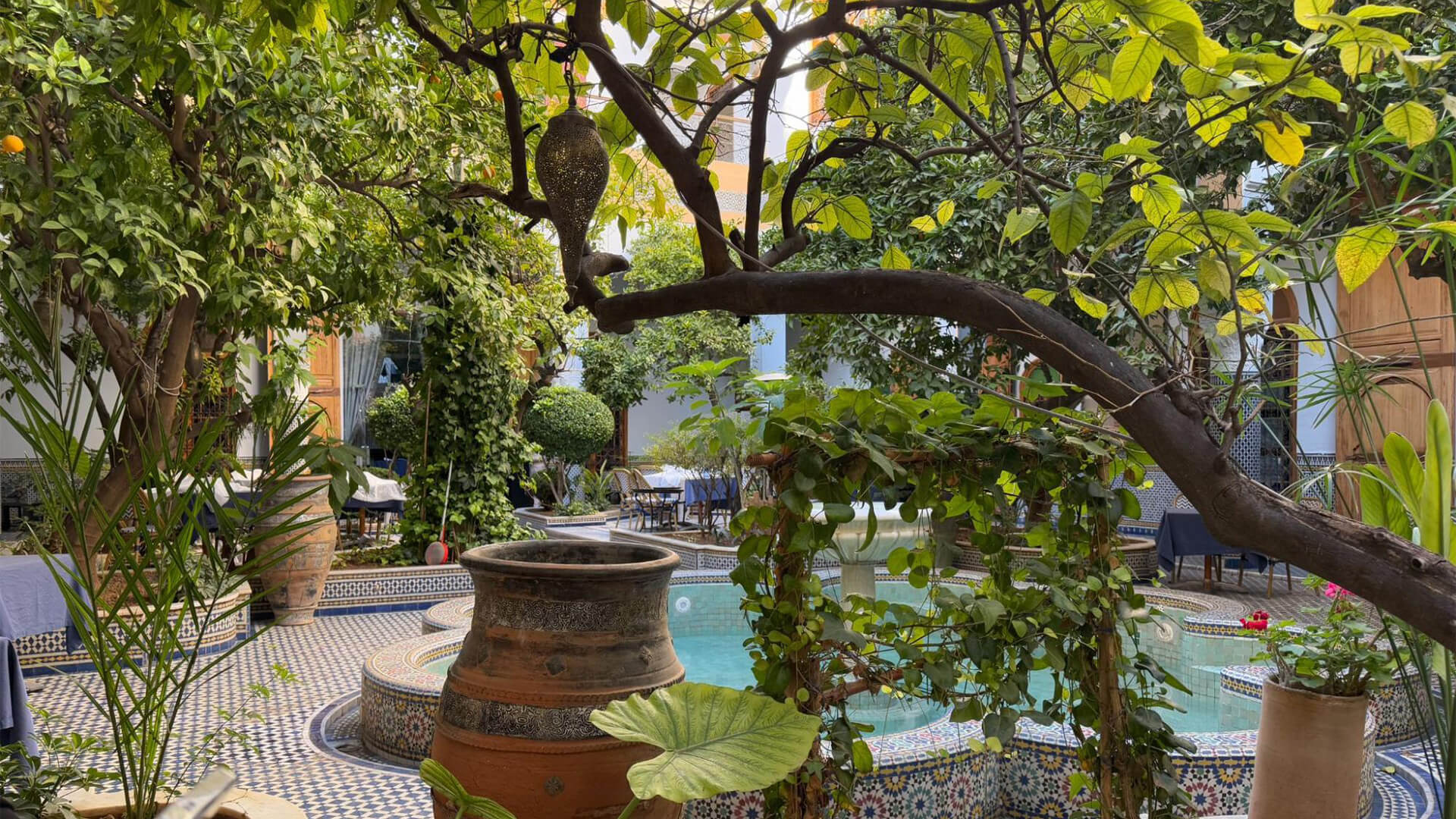
This was also where I learned what a riad actually is. From the street, ours looked almost plain, a simple facade with a modest door, by design. Step inside, though, and it opens into an interior courtyard filled with tilework, carved plaster, and often a fountain, opulent in a way the outside gives away nothing about. It’s a distinctly Moroccan kind of surprise, and I fell for it in every city after this one too.
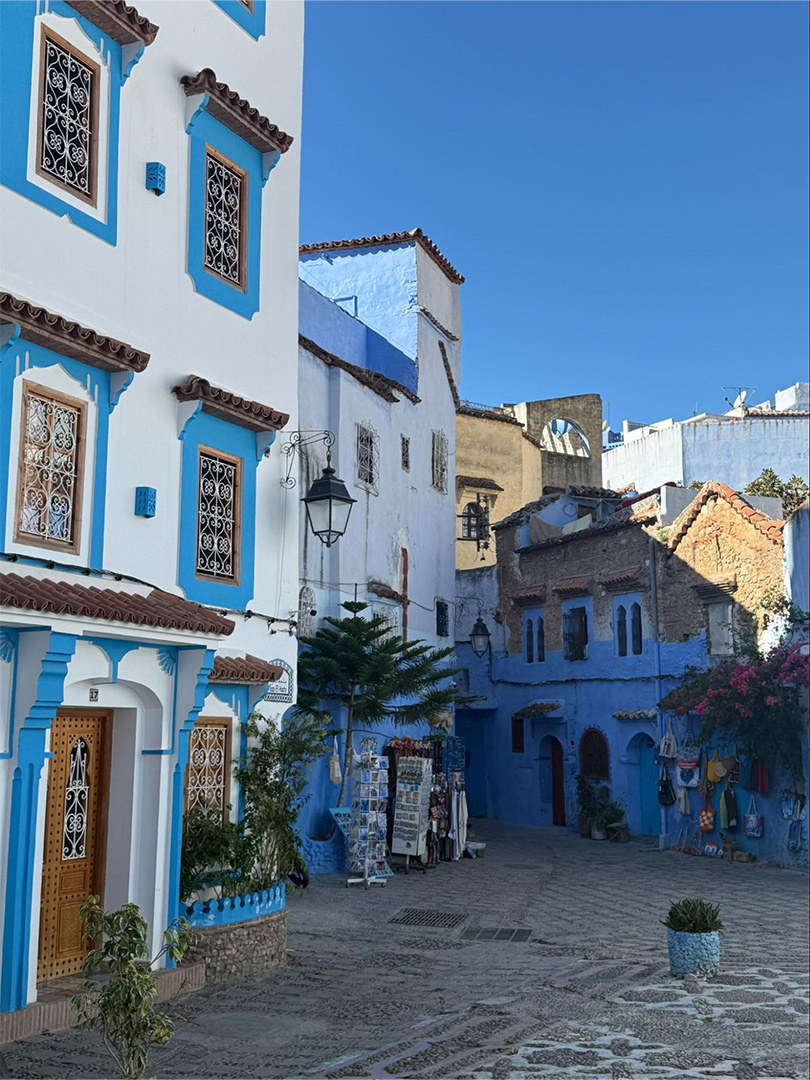
I learned that many of the famous cities of Morocco have a nickname. Marrakech is The Red City (though I thought it skewed pink). Fes is one of the old Imperial Cities, known for its cultural, historical, and spiritual significance. Chefchaouen is the famously photographed Blue City. Chefchaouen earns its nickname honestly. Blue in every direction, doorframes, stairwells, fountains, entire buildings washed in shades from powder to cobalt, with cats curled into doorways like they know exactly how photogenic they are. I spent an embarrassing amount of time chasing the light in Place El Hauta trying to capture it all.
That beauty has made Chefchaouen an Instagram sensation, though, which means the obvious spots get crowded fast, restaurants included. Our hotel’s front desk steered us toward Triana, arranging a complimentary taxi there and back. The food and setting were fantastic, a good reminder that the best finds here come from the people who live there, not the algorithm.
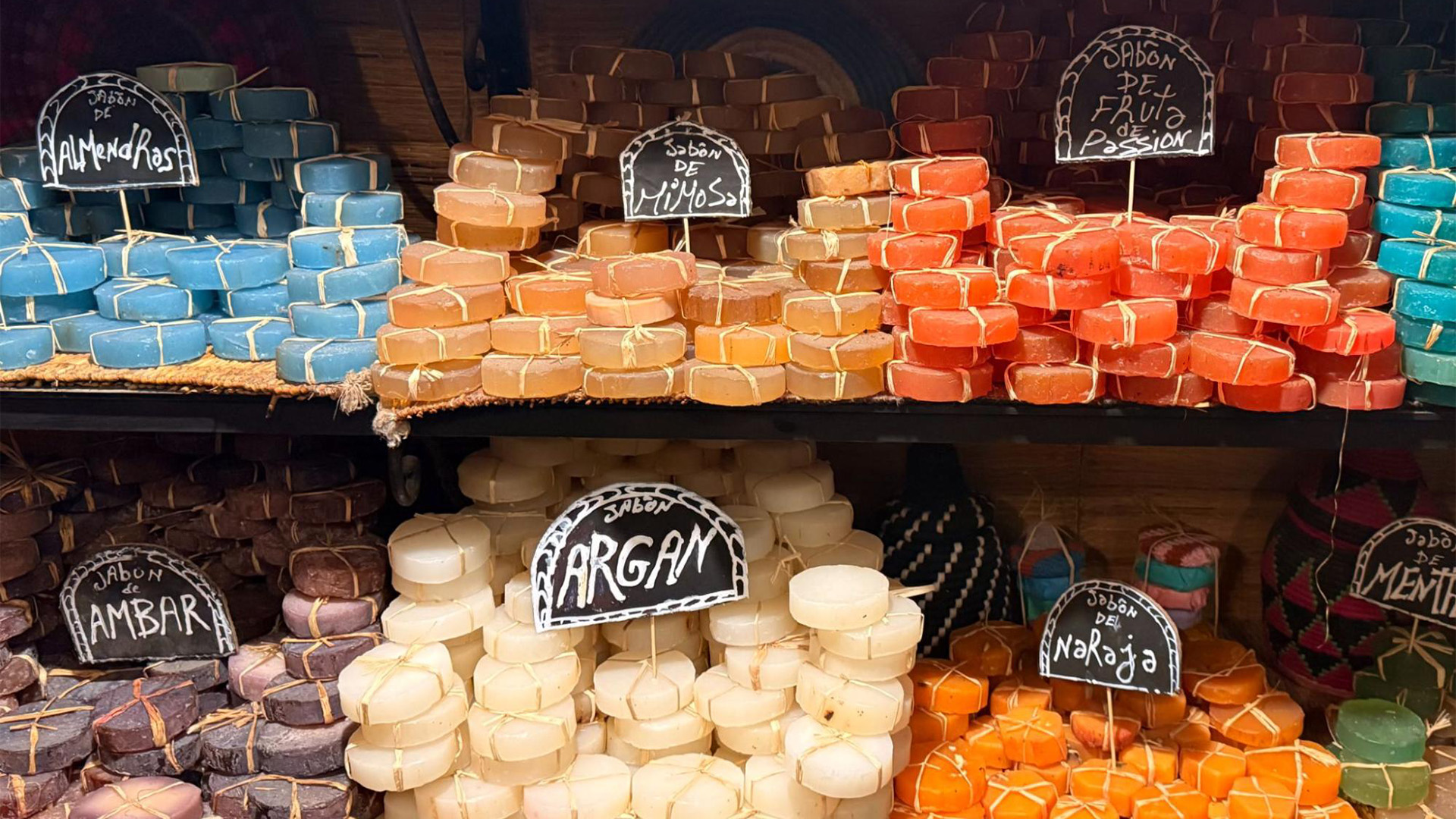
Our guide Mustapha had that same instinct for what to skip. By the end of our time together he felt like family, the sweetest, warmest man, so generous in introducing us to his country. He led us to the peaceful Kasbah and out to Akchour Falls to escape town entirely. Along the way, a shop selling perfumed oils, sandalwood, amber, vanilla, and rose, was impossible to pass up.
Must-Sees & Dos:
- Wander the blue streets and Place El Hauta, especially at golden hour
- Ask your hotel for their real dinner recommendation, not the obvious one
- Visit the Kasbah in the late afternoon for a quieter view of the city
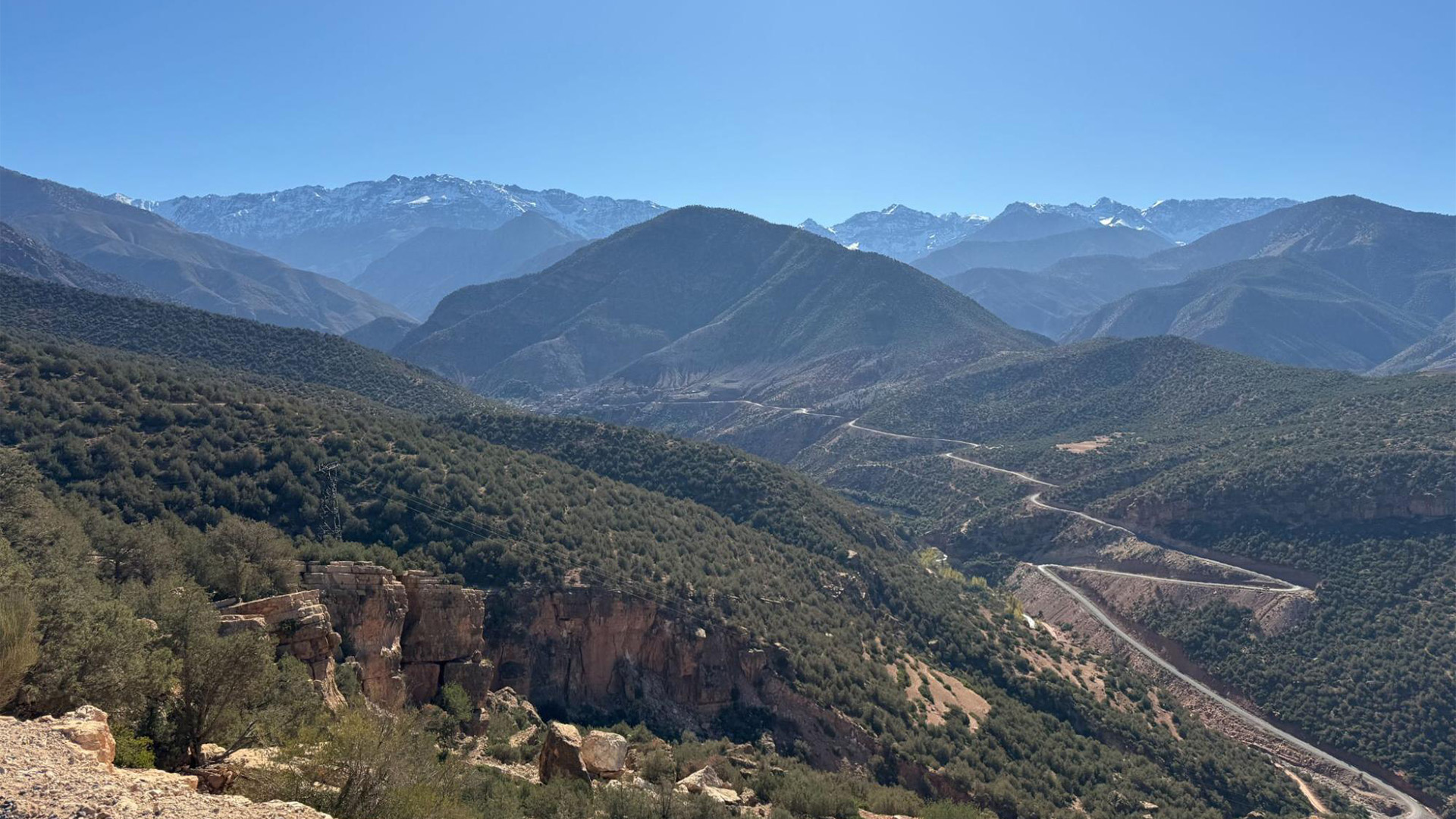
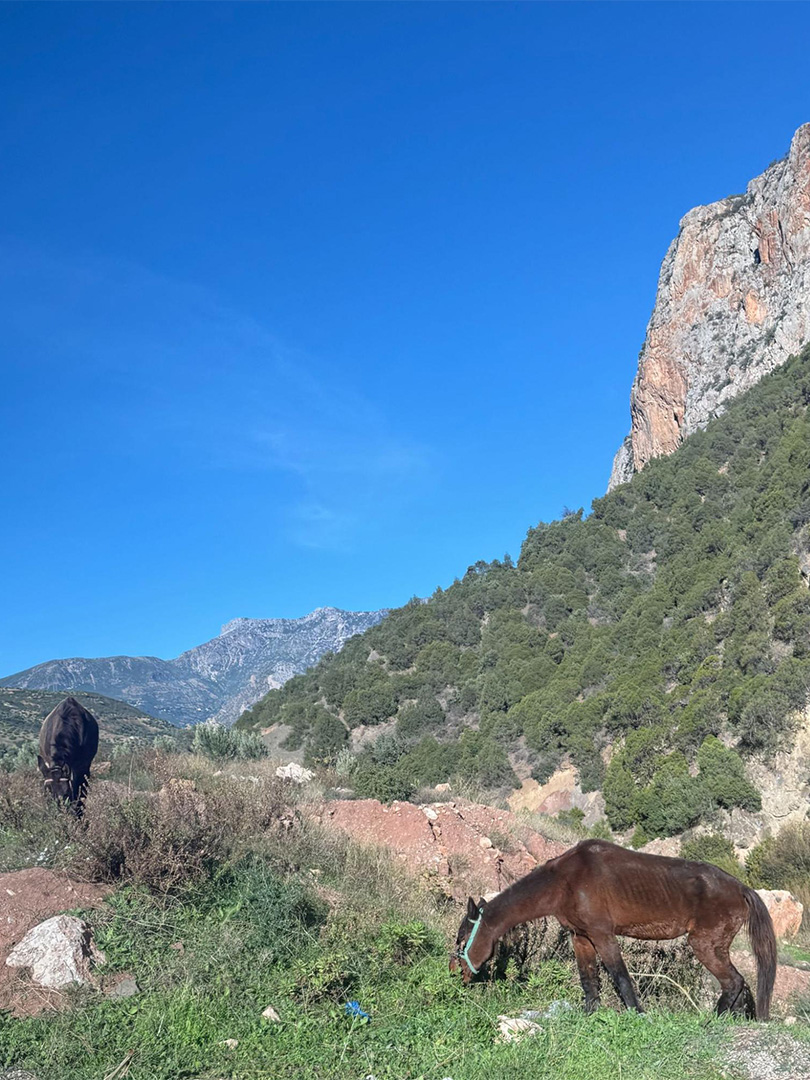
- Drive out to Akchour Falls
Fes: Stepping Back in Time
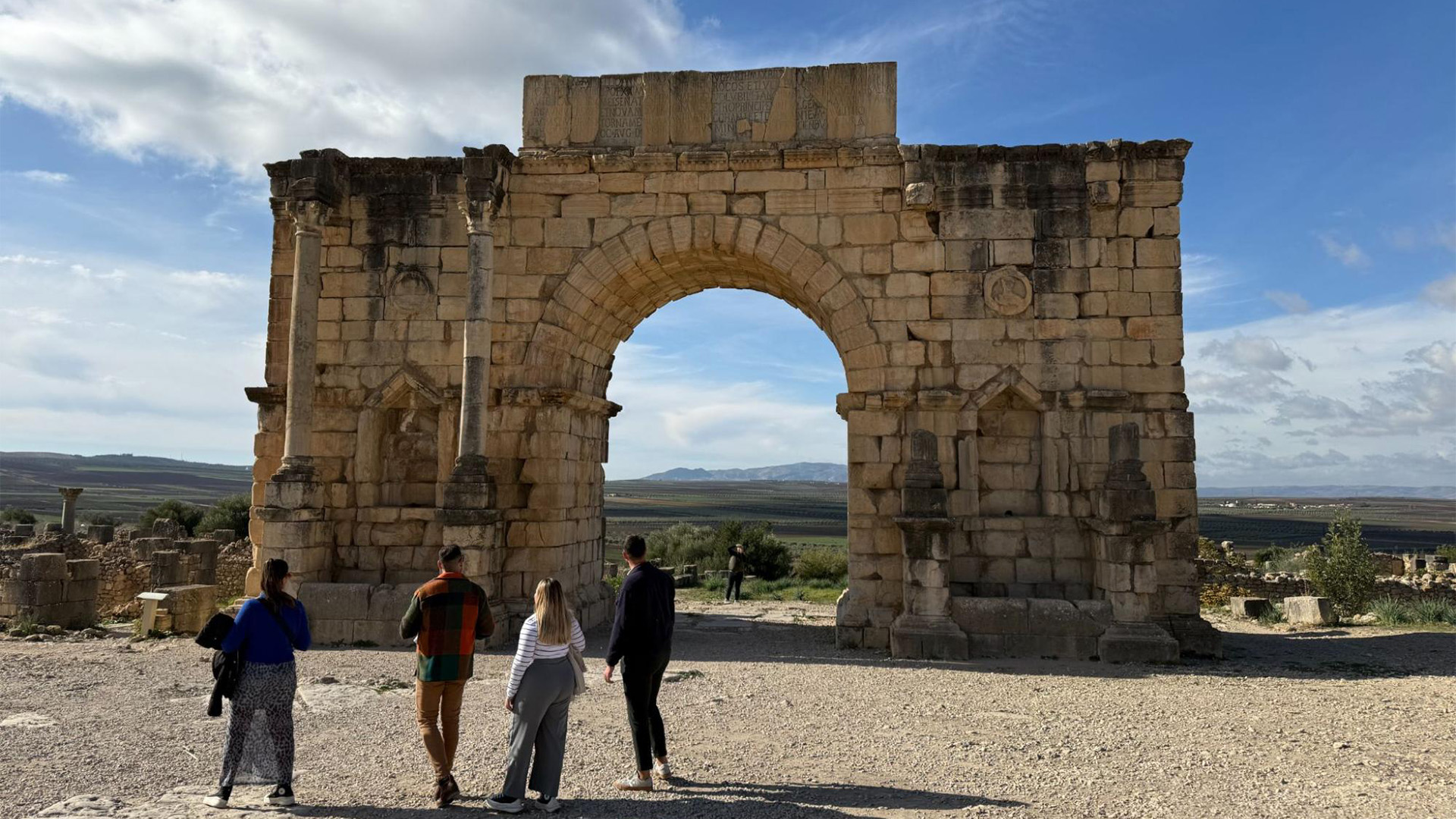
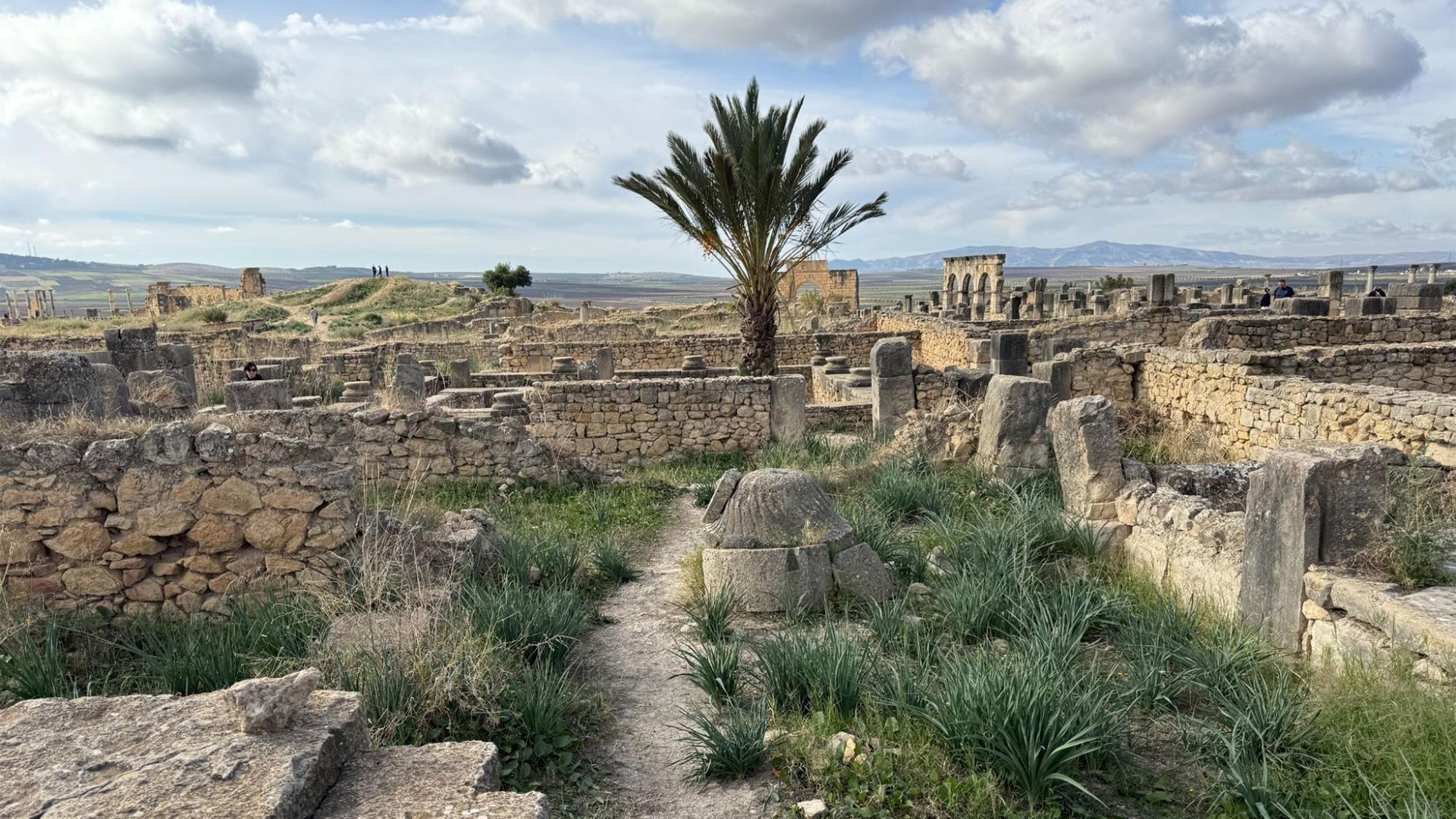
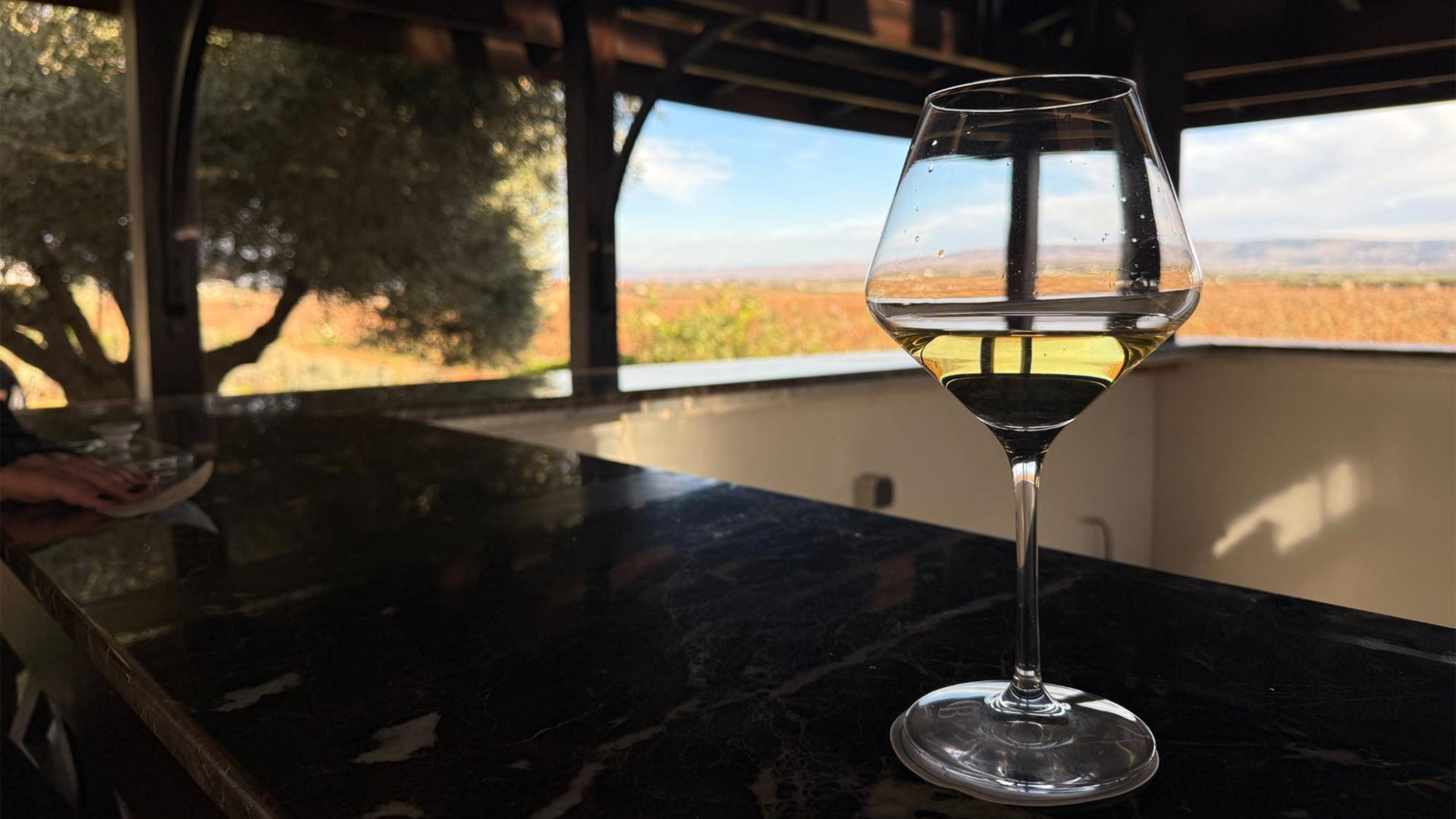
Our first day out of Fes was spent outside it. Mustapha, who’d been with us since Chefchaouen, drove us to Volubilis near Meknes, an ancient Roman site I’d never heard of, sprawling and unexpected in the middle of the countryside. Meknes surprised us too, a wine region, with a tasting I never would have planned for myself.
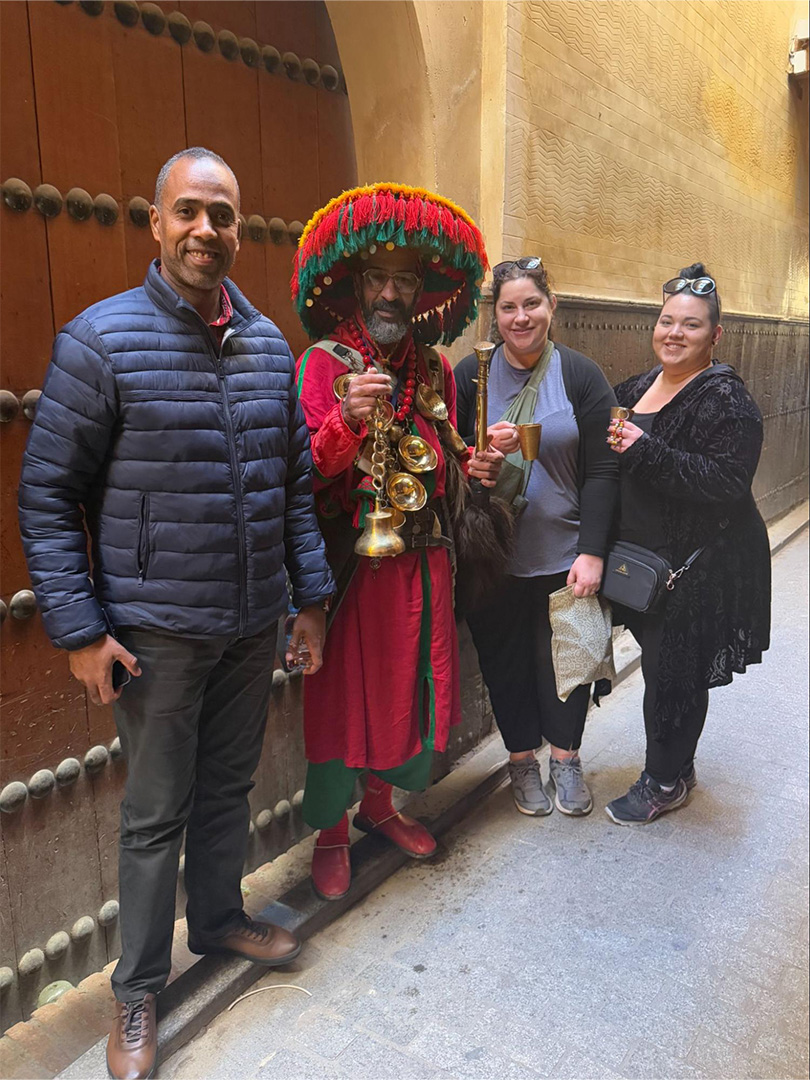
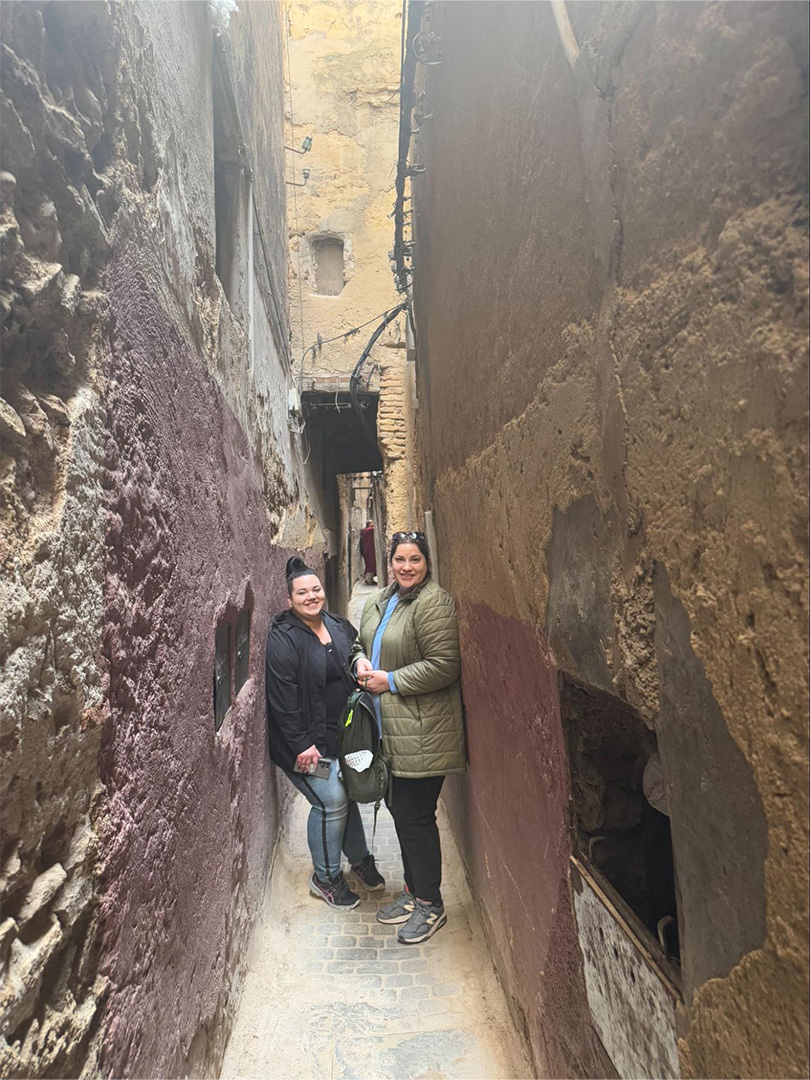
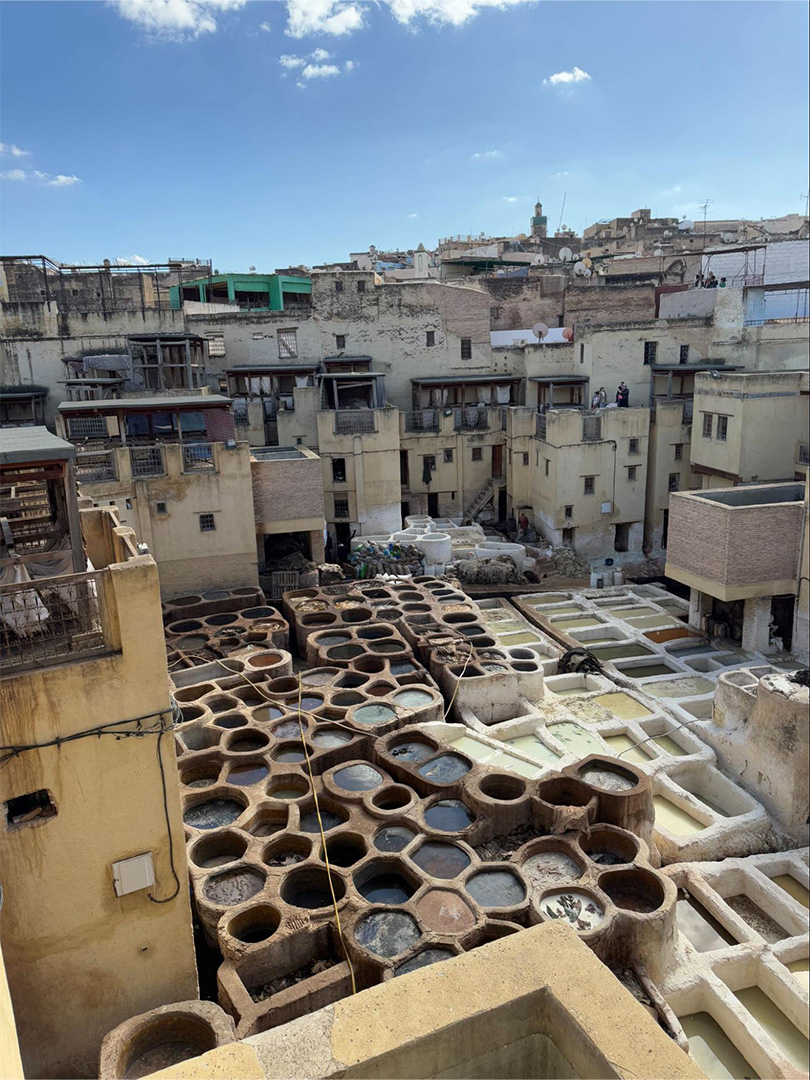
Back in Fes, walking through the old medina, with our guide Thami felt like time travel, souks and winding alleys still fully in use, centuries-old tanneries still operating. The tannery smell is famously pungent, but we were given mint leaves to hold under our noses, and the momentary unpleasantness was well worth what we saw. A Fes native who speaks six languages, Thami was as much a highlight as the medina itself, and by day’s end we felt like old friends catching up with a local.
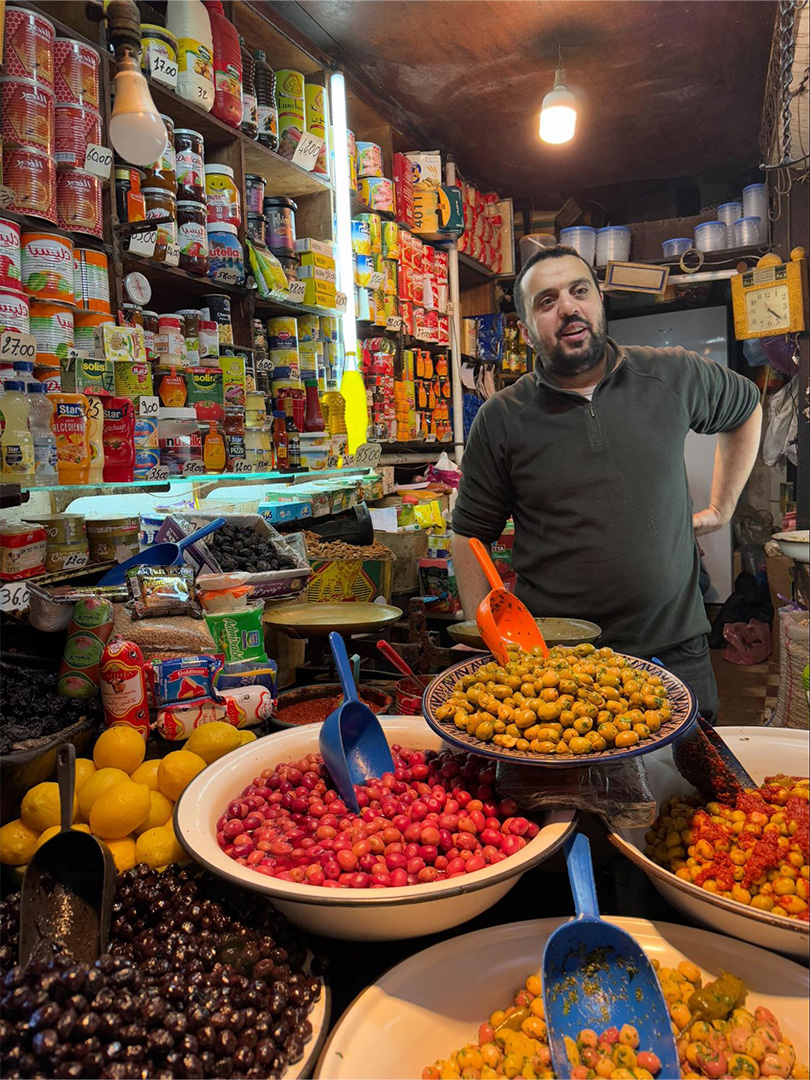
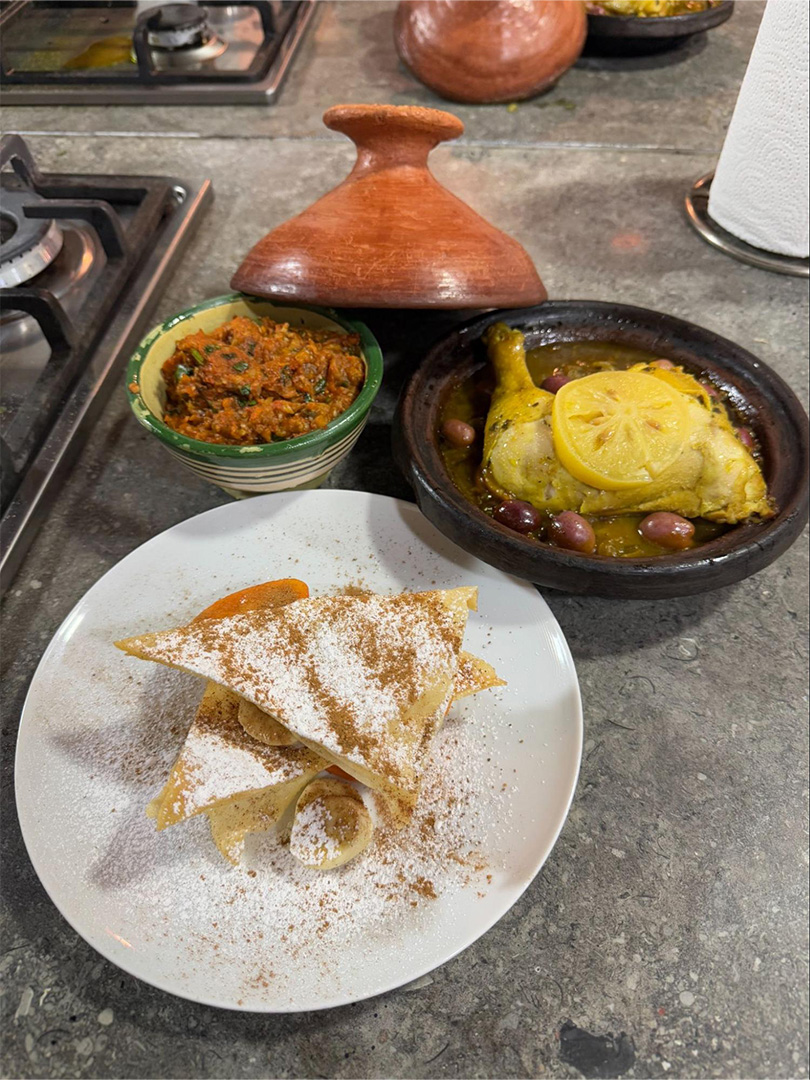
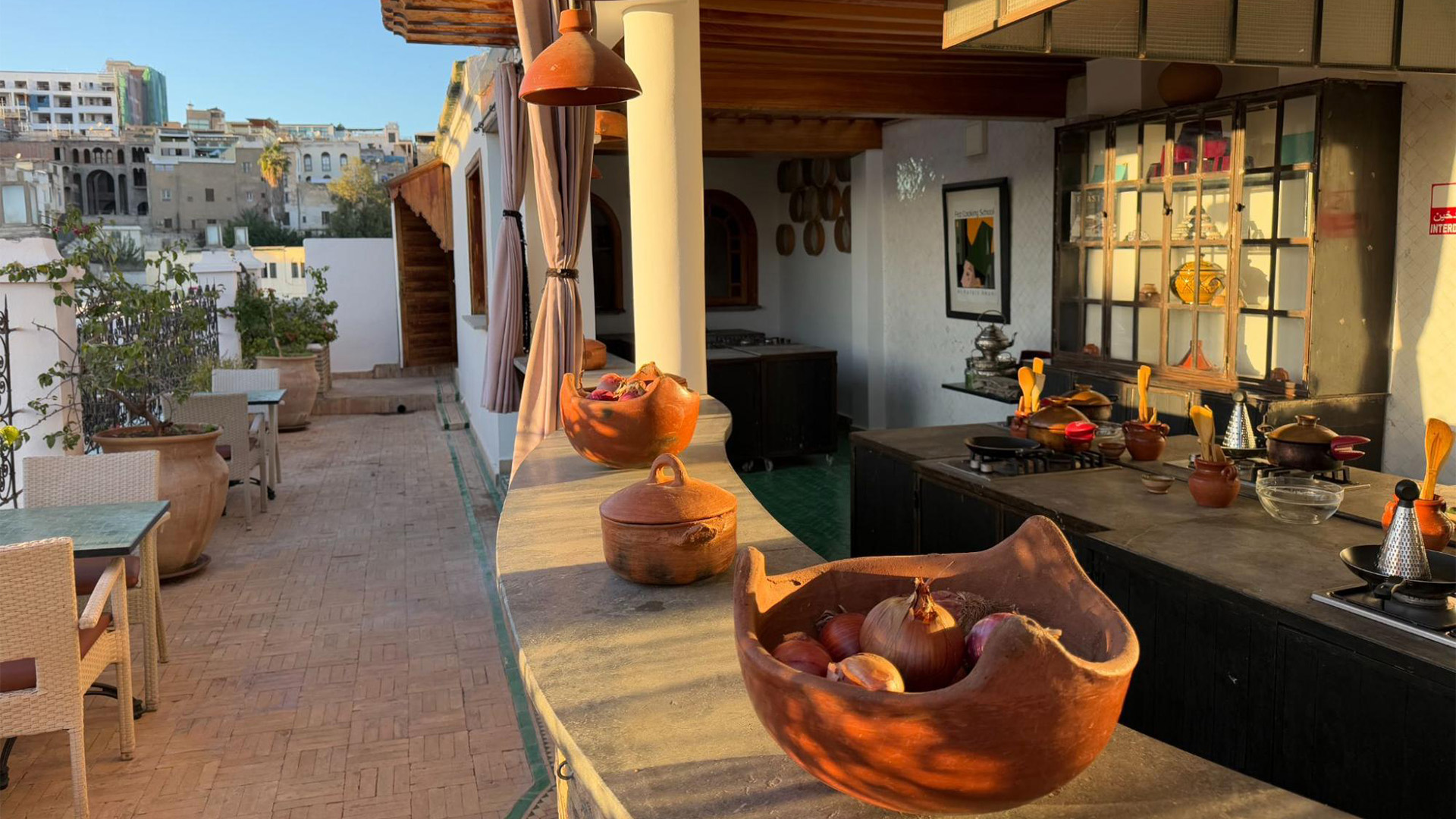
That same evening brought my favorite hours of the trip. Our host Loubna led us through the medina markets to pick our own ingredients, then up a steep, ancient staircase to a tea seller’s tiny room, where an old man prepared his blend of gunpowder green tea, mint, and nearly ten other herbs. We sat surrounded by history, sipping tea unlike anything I’d had. Back at the hotel, we made a chicken tagine, an eggplant salad, and a delicate dessert.
On another evening in Fes, we experienced a traditional Moroccan hammam, unlike anything I’ve had before, something I’m still trying to replicate at home.
Must-Sees & Dos:
- Day trip to Volubilis near Meknes, and ask about the local wineries
- Hire a private local guide for the medina so you don’t get lost
- Take a cooking class that starts at the market, not the kitchen
Marrakech: Where Old Meets New
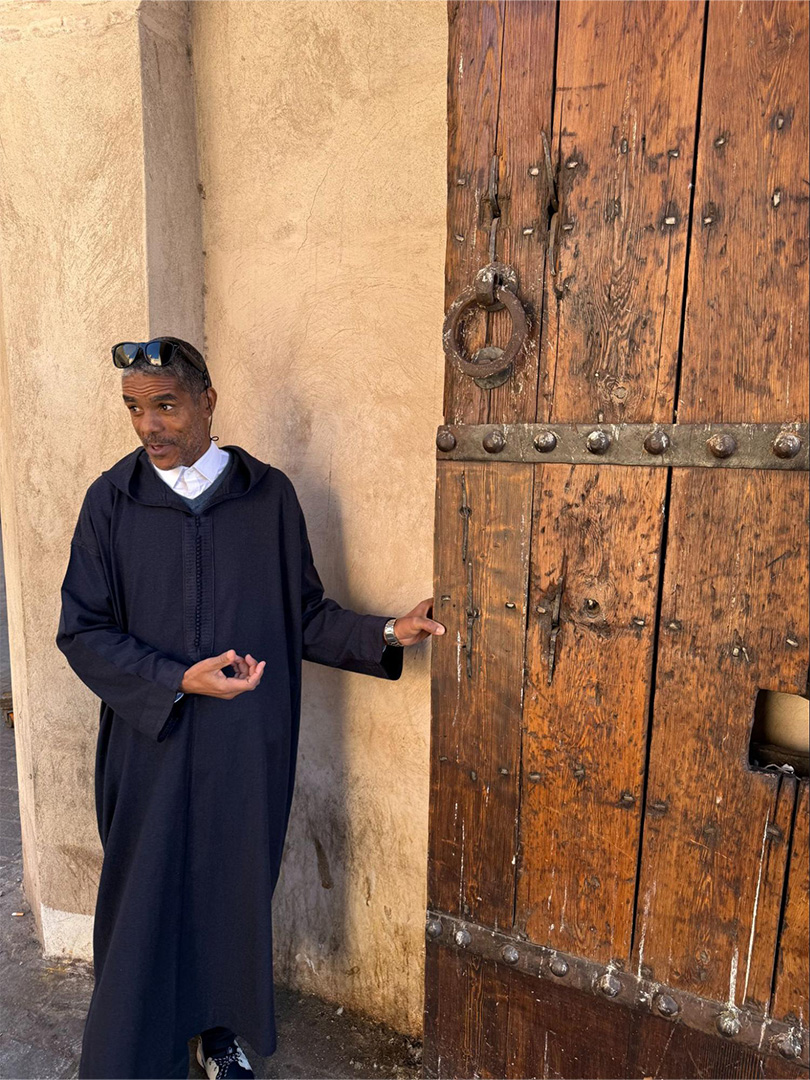
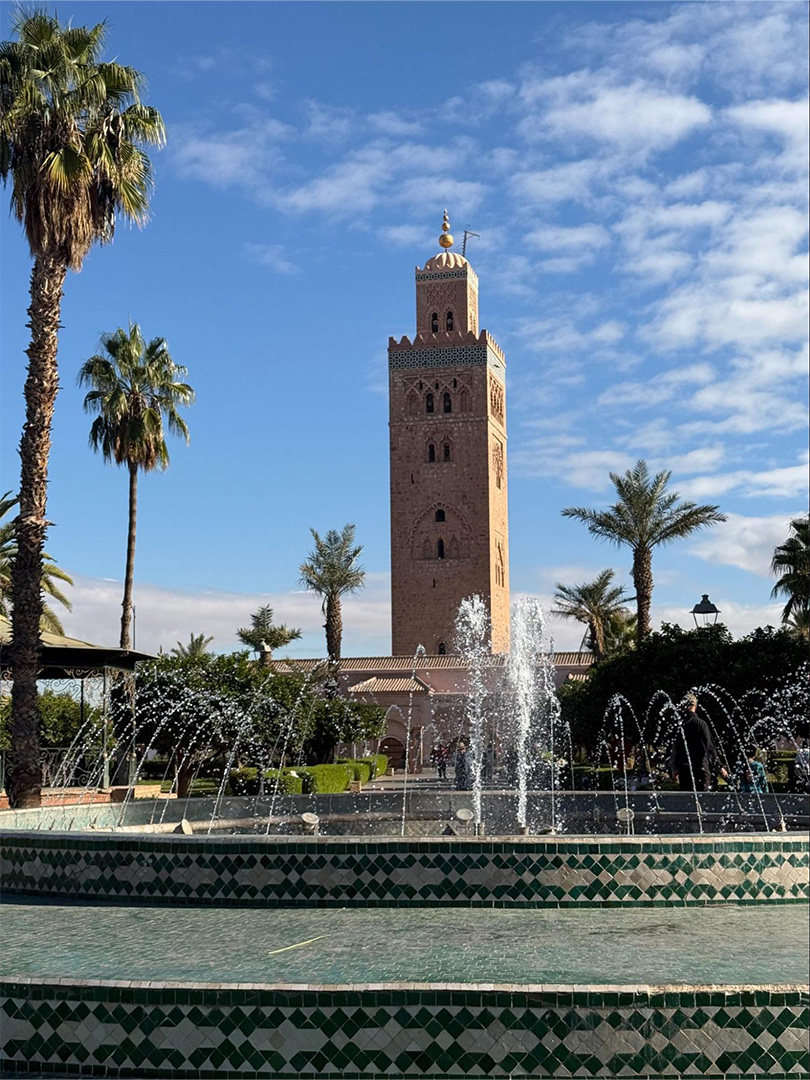
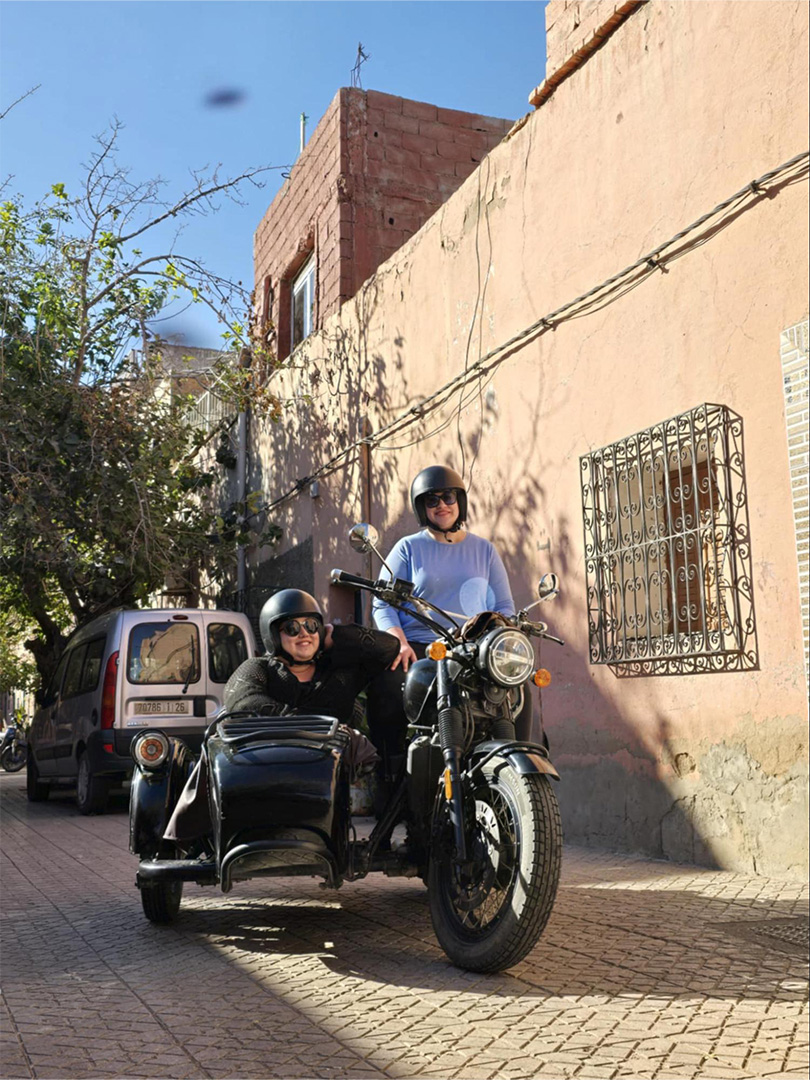
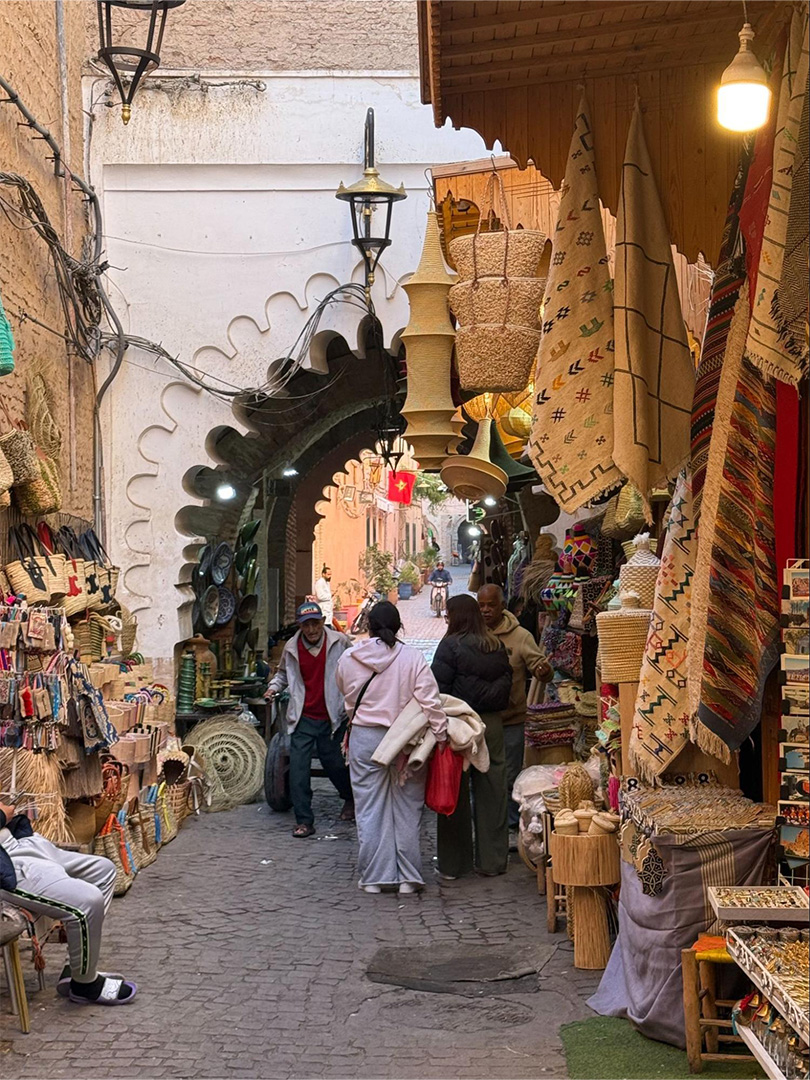
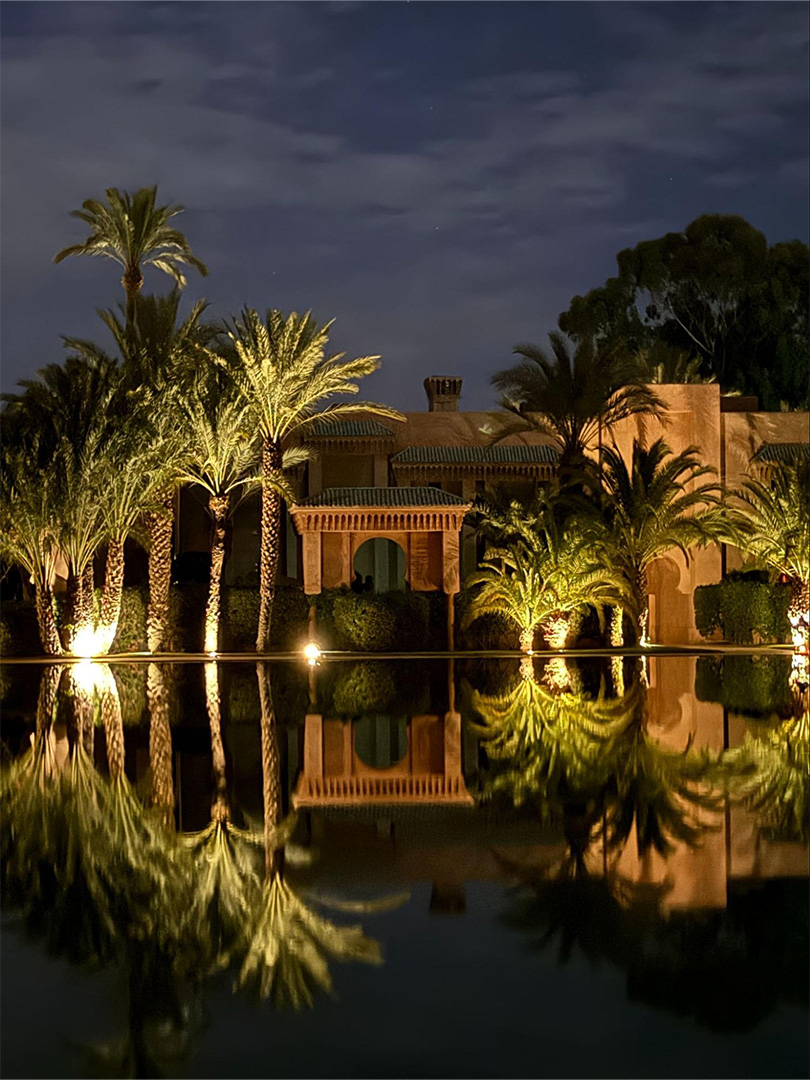
Four nights in Marrakech still didn’t feel like enough. Pink sunsets, the contrast between the old medina and the newer districts, like Gueliz and Hivernage, and of course Hicham, our driver for the entire stay, whose consistency made the city feel familiar fast. Our medina guide Yder told the city’s history the way only someone who grew up there could, and Abdel led a sidecar tour I still can’t say enough good things about. I preferred the back of the bike over the sidecar, though I wished it ran longer.
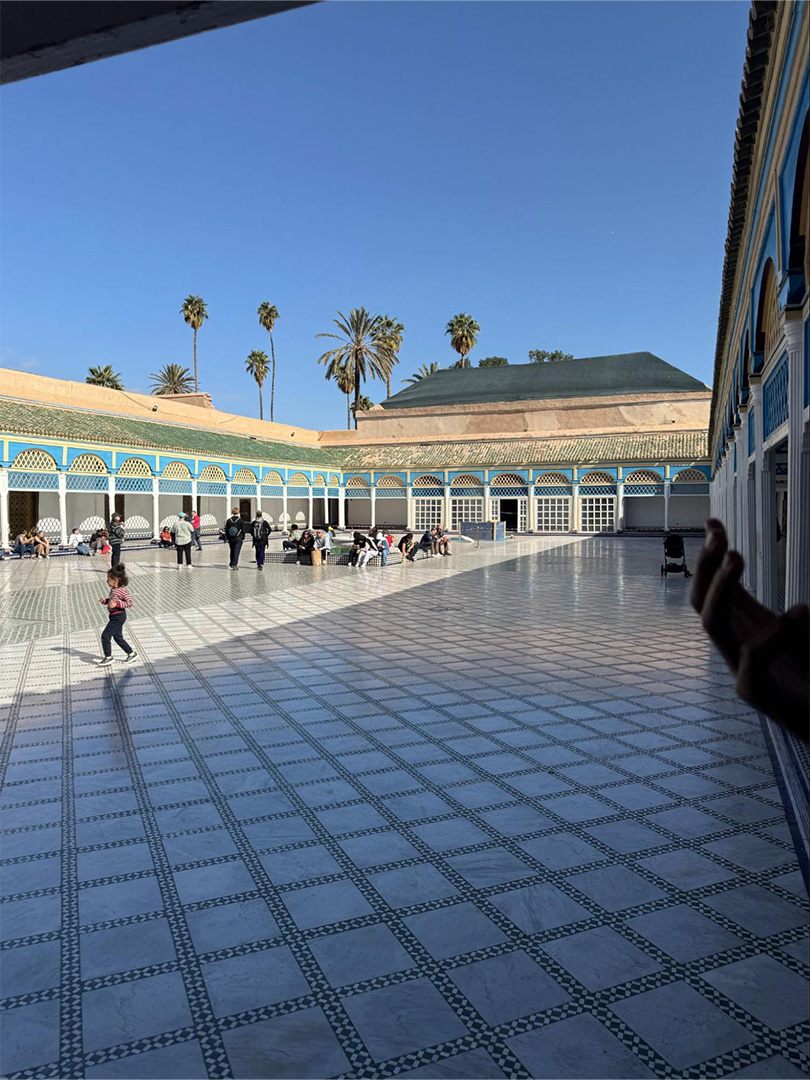
The medina is organized much like Fes, entire squares dedicated to a single trade, orange blossom drifting from the spice stalls. The highlight for me was Bahia Palace.
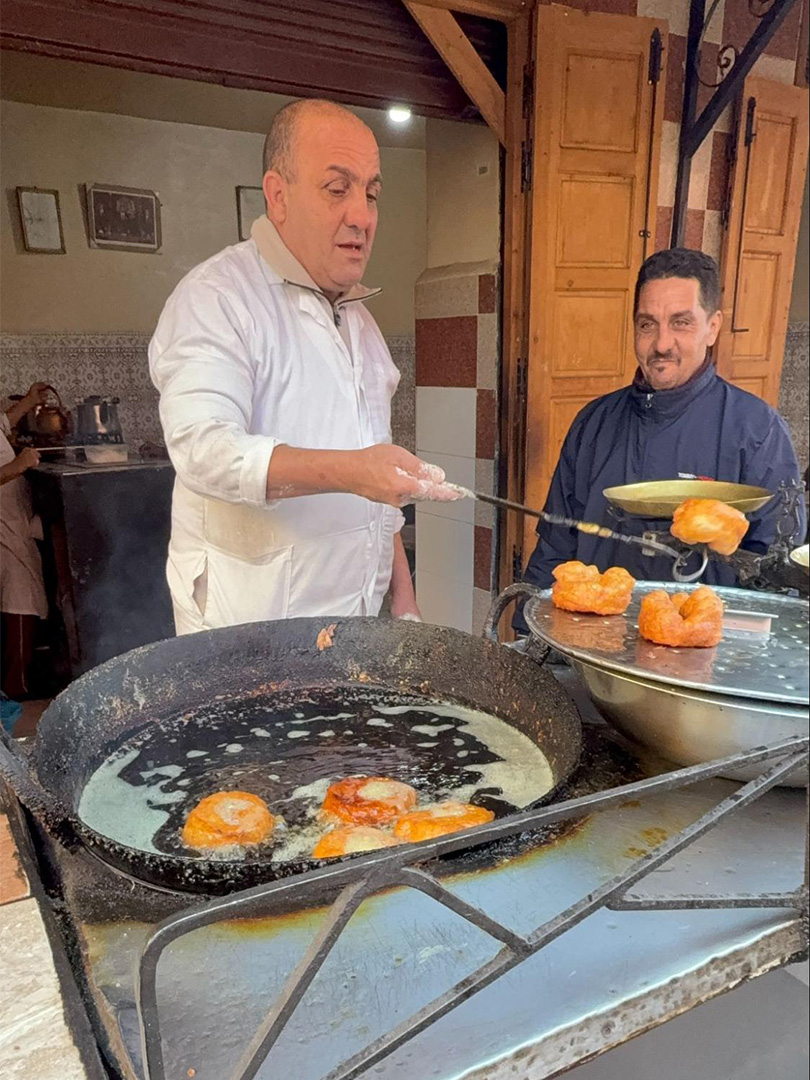
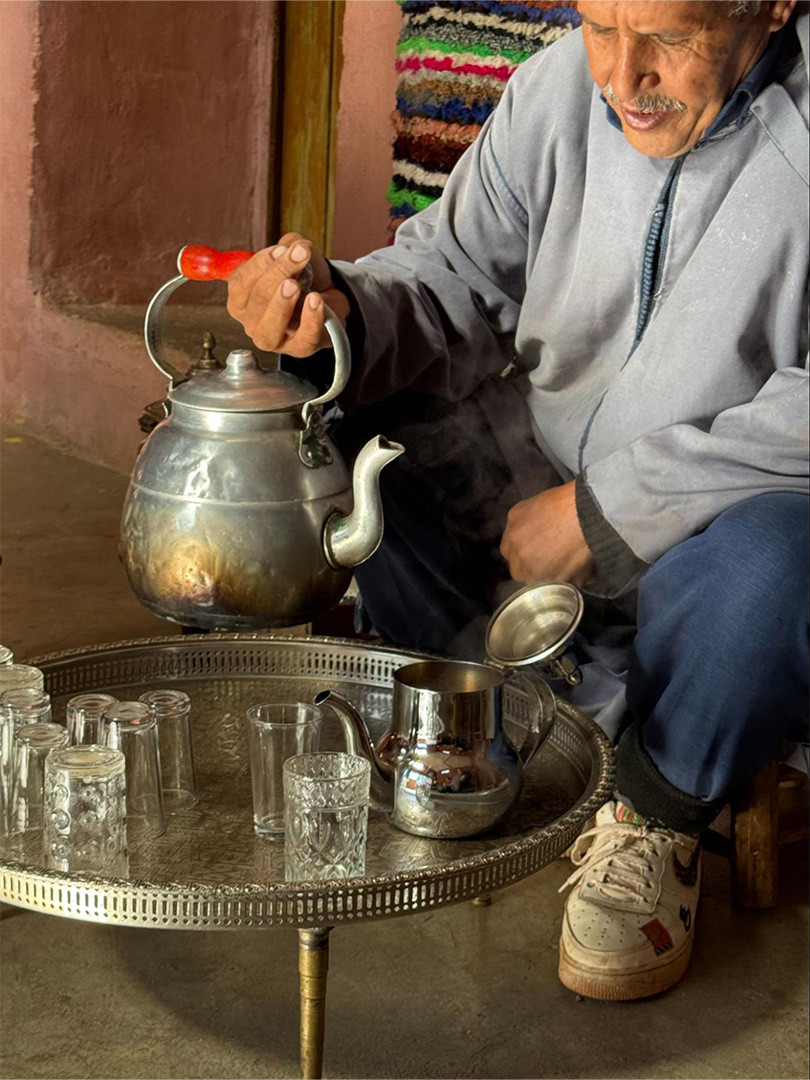
Our food tour with Mohamed, as charming as he was knowledgeable, landed on a Friday, couscous day in Morocco. We ended up at an impossibly casual spot for the best couscous I’ve ever had, made with real care by a local woman who also poured us tea from dramatic heights, the way it’s meant to be. So much food, all of it memorable.
Must-Sees & Dos:
- Take a sidecar tour of the medina
- Visit Bahia Palace’s carved wood and plaster ceilings
- Book a food tour, and go on a Friday for couscous
Agafay: A Desert Escape Without the Distance
Agafay isn’t the Sahara, no dunes, just rocky desert an hour from Marrakech, ideal if you’re short on time. From Inara Camp, we spent a day with a Berber guide in the Atlas Mountains, where a local family welcomed us in for tea and biscuits. The region is still rebuilding from the 2023 earthquake, and the hospitality we were shown there stuck with me most.
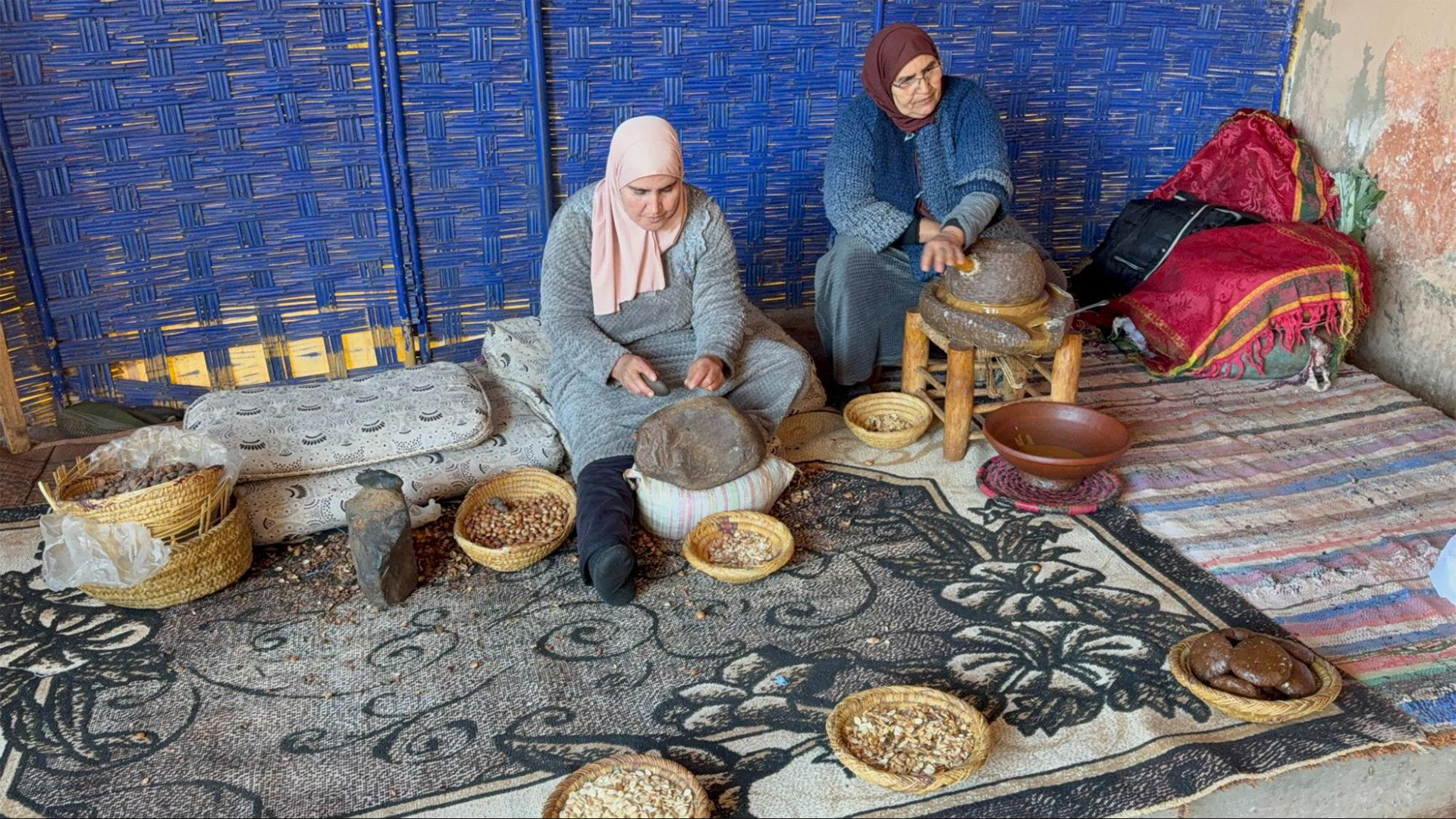
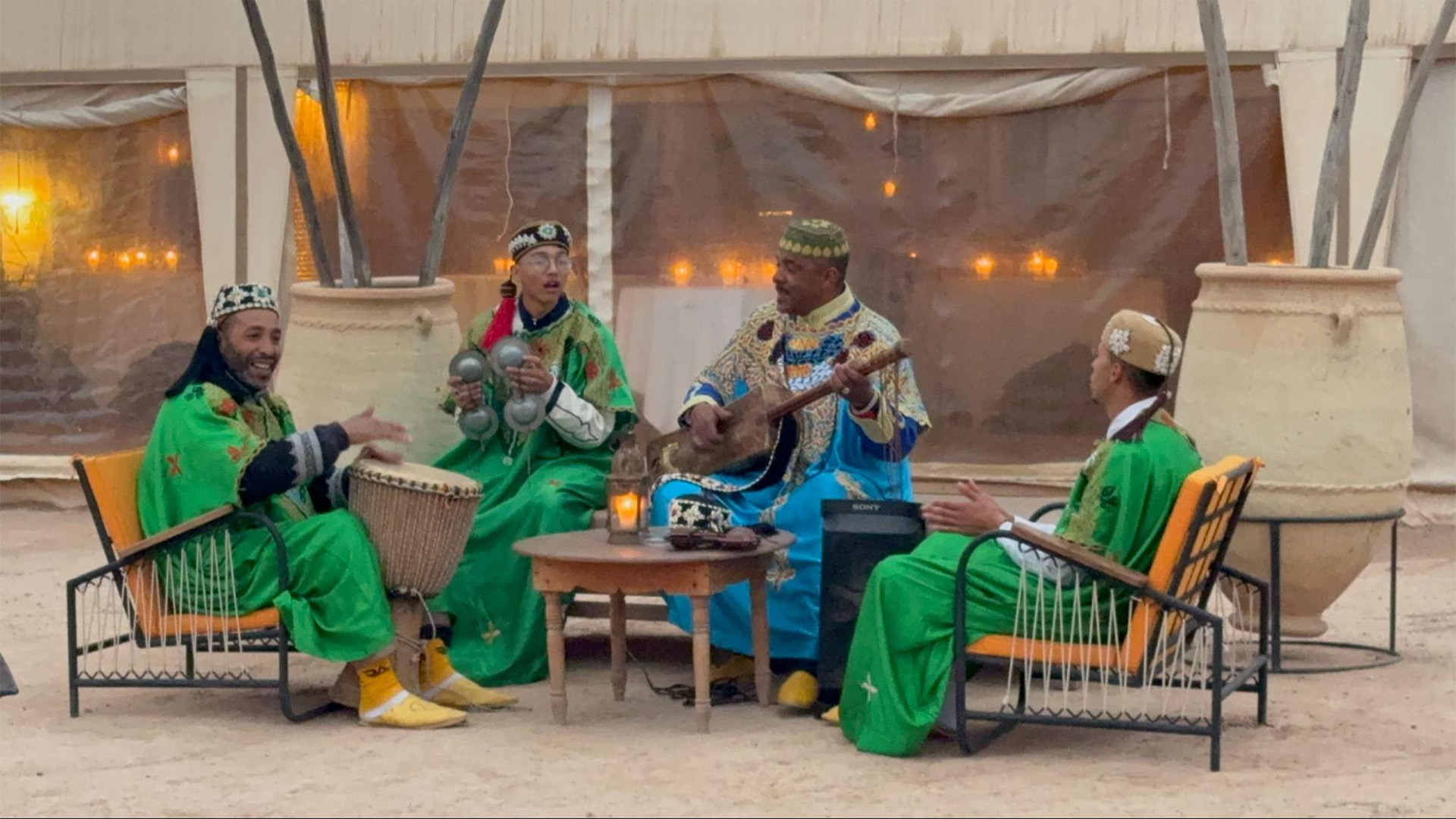
We visited a women’s cooperative to watch amlou being made from local argan oil, and a local woman taught me to bake bread in a traditional clay oven. Dinner came with gnawa music, new to me and instantly loved, and a fire dancer under a full spread of stars.
Must-Sees & Dos:
- Day trip into the Atlas Mountains with a Berber guide
- Visit a women’s argan oil cooperative
- Try baking bread in a traditional oven
Reflecting on the Trip
Morocco hit me differently than I expected. It wasn’t just the architecture or the landscapes, it was the people. Mustapha’s care in guiding us for days and making sure to bring us to the best places at the best times, Thami’s pride in his city, Loubna’s tea room detour and zest for life, Mohamed’s Friday couscous, the family who welcomed us into their home in the Atlas Mountains. Those moments don’t show up in a guidebook, and some of them will never show up on Google either. The best of what we found in Morocco came from people, not reviews, and that’s exactly why the connections we’ve built on the ground matter so much in how we plan your trip.
If Morocco is calling your name, and I understand why, WAC Travel can help you experience it the same way we did, with the people and places that make it unforgettable.