





Europe’s New Entry/Exit System (EES): What Travelers Should Know
If a trip to Europe has been on your mind, there’s a new update worth knowing before you go.
The European Union has introduced a new border system called the Entry/Exit System, or EES. It changes how travelers enter and exit the Schengen Area, but in practice, it’s designed to make the process more modern and streamlined.
It’s not complicated, and it won’t take away from your experience. A little awareness ahead of time simply makes everything feel easier when you arrive.
What Is the EES?
The Entry/Exit System is a new digital border management system introduced by the European Union. Launched in October 2025, it replaces the traditional passport stamping process with a fully automated system. Instead of collecting stamps along the way, your entry and exit are recorded digitally.
When you arrive in a participating European country, the system registers basic details like your passport information, along with biometric data such as a facial image and fingerprints. Your entry and exit dates are logged automatically, along with the location of your crossing.
If you’ve traveled to Europe before, the biggest shift is simply that everything is now tracked digitally rather than manually.
One of the most helpful changes is that the system automatically monitors the 90-day rule, which allows non-EU travelers to stay for up to 90 days within a 180-day period across the 29 Schengen countries, which include most of the EU plus a handful of non-EU nations like Norway, Switzerland, and Iceland. What was once calculated through passport stamps is now handled seamlessly in the background.
Who Does This Apply To?
For most travelers, this applies exactly as you’d expect. If you’re visiting Europe from the United States for a short-term trip, whether it’s a two-week vacation or a longer multi-country itinerary, the EES will apply when you enter the Schengen Area.
There are a few exceptions. The system does not apply to EU citizens, those with long-term visas or residency, or certain cruise itineraries that begin and end outside of Schengen borders.
What to Expect When You Arrive
This is where it becomes helpful to know what the experience will feel like.
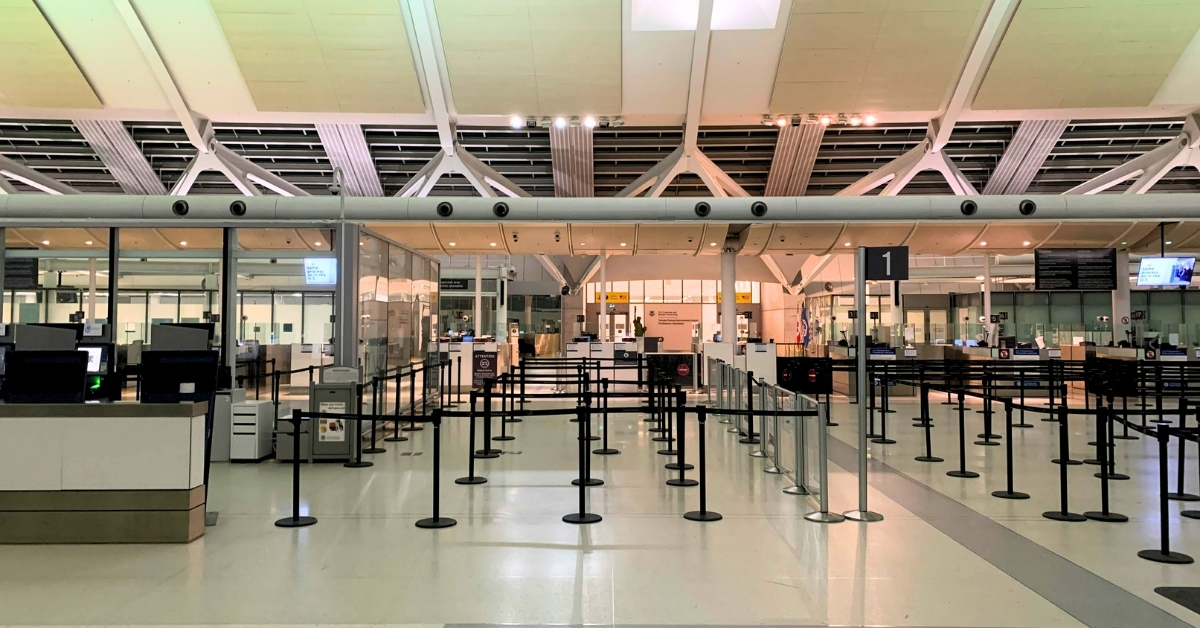
When you arrive at your first destination within the Schengen Area, you’ll be guided to a self-service kiosk or a border control booth. The process is straightforward, and while it may feel new at first, it’s designed to move efficiently once you know what to expect.
Here’s how it typically unfolds:
Europe’s New Entry/Exit System
| Step | What Happens | What to Expect |
|---|---|---|
| 1 | Approach the kiosk or border booth | Follow airport signage directing you to EES kiosks or staffed passport control lines. |
| 2 | Scan your passport | Place your passport on the scanner so the system can read and register your travel details. |
| 3 | Facial image capture | A quick photo is taken to match your identity. This takes just a few seconds. |
| 4 | Fingerprint scan | You’ll place your fingers on a scanner. This is typically required for first-time registration only. |
| 5 | Registration complete | Your information is securely stored in the system for future visits. |
| 6 | Border officer check (if needed) | In some cases, an officer may ask a few standard questions about your trip. |
| 7 | Entry recorded | Your entry is logged digitally, and you’re on your way to begin your trip. |
The process itself is straightforward, though during this initial rollout phase, lines may be slightly longer as travelers and airports adjust.
Once your information is in the system, it remains on file for three years. On future trips, you’ll typically only need a quick fingerprint or photo to verify your identity, making repeat visits faster and more seamless.
A Note on Timing
As of April 2026, all Schengen countries are required to use EES at their external borders.
With any new system, there is a period of adjustment. Some airports have already experienced longer wait times, particularly during peak travel periods.
If your itinerary includes a connection through a European city, it’s worth allowing a bit of extra time, especially for your first visit under the new system. Once you’re through, the rest of your journey continues as planned.
If your travels include crossing between the UK and mainland Europe, such as via the Eurotunnel, the process may take place before departure, with additional time needed at the terminal.
What Should You Do Differently?
For the most part, not much needs to change. It simply helps to arrive with a bit more time, particularly on your first trip using EES. If you’re connecting through Europe, slightly longer layovers can make the experience feel more relaxed.
Every traveler, including children, will need their own valid passport. There is no pre-registration required, and there are no additional fees tied to EES.
Looking ahead, you may also hear about ETIAS, a separate pre-travel authorization expected to launch in 2026. It has not been implemented yet, but it will eventually work alongside EES. As always, we’ll continue to share updates as more details become available.
The Bottom Line
EES is not a reason to delay a trip to Europe. If anything, it’s a shift toward a more modern and efficient travel experience. There may be a few adjustments along the way, but once the system settles into place, it is designed to make future travel smoother, not more complicated.
Europe remains as captivating as ever. The café-lined streets, the late afternoon light over the Mediterranean, the quiet charm of small villages. None of that has changed.
If anything, this is simply a reminder that the details behind the scenes are evolving, while the experience itself remains timeless.
There is a lot changing in the world of international travel right now, and staying informed makes all the difference. For more on what’s ahead, including ETIAS, the UK ETA, and other updates, check out our other blog.
And when you’re ready to plan your next trip, we’re here to help make it feel effortless from start to finish.
 How to Travel Safely During Times of International Conflict
Previous
How to Travel Safely During Times of International Conflict
Previous
 La Dolce Vita, City by City: My Journey Through Rome, Florence & Venice
Next
La Dolce Vita, City by City: My Journey Through Rome, Florence & Venice
Next